


Lightning is a powerful and unpredictable natural phenomenon that can disrupt critical infrastructure, spark dangerous wildfires, and threaten public safety. Increasingly, organizations and communities are finding value in using lightning risk assessment tools and historical data to better anticipate and manage potential dangers. With a clearer understanding of where and when lightning is most likely to strike, targeted strategies can be developed to reduce losses and enhance safety.
Analyzing historical lightning patterns enables agencies and industries to make better-informed decisions, saving lives and reducing costly disruptions. Importantly, the data provides critical insights that guide planning and improve preparedness for lightning-related hazards. As technology continues to advance, artificial intelligence and other modern techniques are further refining our ability to process and interpret lightning activity at scale.
Understanding Lightning Patterns Through Historical Data
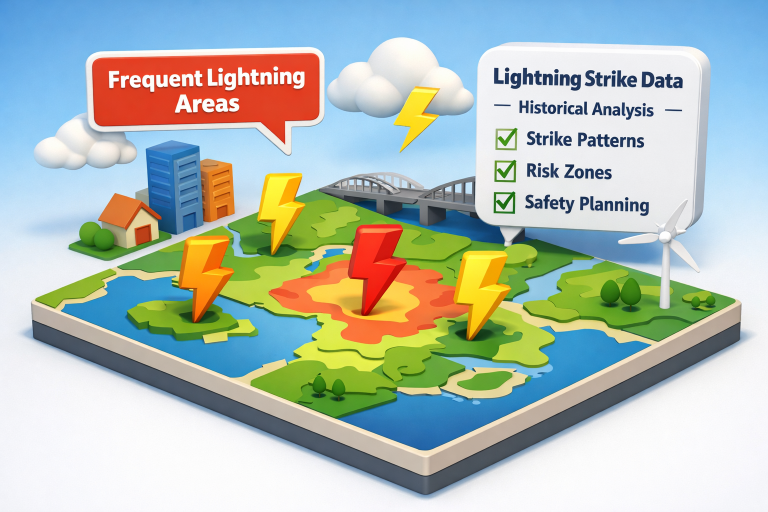
Examining the history of lightning strikes in a given region reveals valuable trends for decision-makers. For example, meteorological records consistently show that certain regions are more likely to experience severe lightning during specific months or weather patterns. This information is especially useful for city planners, utilities, and emergency crews who must direct resources to where they are most likely to be needed.
In some areas, increased lightning activity aligns with seasonal changes such as the onset of summer thunderstorms. By quantifying these patterns using accurate, up-to-date historical records, operational leaders can more effectively prioritize infrastructure upgrades, warn populations at risk, and implement safety plans ahead of peak lightning periods. Comprehensive resources, such as the National Oceanic and Atmospheric Administration (NOAA), provide datasets and forecasts that inform this process.
Enhancing Prediction with Advanced Technologies
The science of predicting lightning strikes has significantly evolved, thanks in part to high-resolution satellite observations and machine learning. Today, weather agencies harness vast amounts of data from lightning detection networks that collect real-time information on lightning flashes worldwide. By applying machine learning algorithms to these records, researchers can craft predictive models that assess future lightning risk with greater accuracy.
Tools developed by leading authorities, such as those employed by the NOAA, leverage both physical models and historical datasets. For example, their Geostationary Lightning Mapper provides continuous coverage and tracks thunderstorm development, which is vital for issuing early warnings and mobilizing emergency services. As more data is collected and processed over time, these tools become increasingly powerful and precise.
Integrating Data into Safety Protocols
The practical benefits of using historical lightning data are apparent across many fields. In aviation, flight schedules are increasingly planned with an eye on lightning risk; delays caused by thunderstorms are minimized, and passenger safety is improved. By factoring in historical lightning activity, airport operators can strategically allocate ground crews and avoid exposing staff and travelers to unnecessary risk.
Power grid operators also stand to benefit from analyzing long-term lightning data. By identifying weather conditions and time periods most likely to lead to lightning-induced outages, they can perform preventative maintenance, reinforce at-risk infrastructure, and speed up restoration response times. Industries that rely on outdoor operations, such as construction or mining, likewise rely on this data to schedule work stoppages and prevent injuries.
Case Studies: Effective Use of Lightning Data
- Aviation: Airlines and airports collaborate with meteorological services to forecast lightning activity, minimizing delays and improving on-time performance. Insights from historical strike data inform the development of passenger safety guides and operational procedures.
- Energy Sector: Utility companies use predictive models that analyze past lightning-strike locations and frequencies to identify weak points in transmission lines. Performance data from these models has helped reduce the impact of lightning storms on power delivery. Coverage highlights how these proactive strategies are adapting to shifting climate patterns.
- Wildfire Management: Firefighters and land managers use lightning-strike data, often combined with drought and vegetation data, to pinpoint areas likely to ignite. Emergency services use these insights to pre-position resources and improve rapid response to incidents.
Challenges in Utilizing Historical Lightning Data
Even with growing access to lightning records, some challenges persist. Ensuring the accuracy and completeness of datasets is critical; incomplete data may lead to poor resource allocation and responses. Additionally, organizations must allocate both funding and expertise to maintain and upgrade monitoring networks while also integrating new data into sometimes-complex legacy safety protocols.
Privacy concerns and data-sharing restrictions can also affect collaborative efforts, particularly when private-sector and government agencies need to integrate research and forecasts across borders. Ongoing research and shared standards are helping address these concerns, enabling communities to make the most of available information.
Future Directions in Lightning Safety Planning
Looking ahead, machine learning and artificial intelligence continue to push the boundaries of lightning forecasting and risk reduction. With more sensors and satellites being added to global networks, the volume and granularity of lightning data will only increase. Future safety plans will likely include real-time alerts delivered straight to mobile devices, smart city systems, and more accurate simulation tools for training emergency responders.
Cross-disciplinary partnerships among meteorologists, engineers, emergency planners, and the tech industry are expected to drive innovation. The combination of robust historical analysis and cutting-edge prediction platforms will help safeguard communities from the ever-present threat of lightning.
Conclusion
Access to historical lightning data, paired with the latest predictive technologies, is transforming how society prepares for and responds to this powerful natural phenomenon. Through diligent analysis and innovative application, industries and communities can build more resilient systems, reduce harm from severe weather, and ensure a safer future for all.

