


Running a restaurant is one of the hardest businesses in the world. Your margins are tight, your hours are long, and the last thing on your mind after a dinner service is updating your website. But here is the reality that a lot of food business owners are starting to wake up to. Being listed on Zomato, Swiggy, or Google Maps is not the same as having your own online presence, and the difference between those two things is costing restaurants real money every single month. Enter Pro has been quietly useful for food business owners who want something professional without dedicating weeks to building it. Even getting comfortable with a free code editor to make small updates to your menu page or tweak your booking section can save you from paying someone else every time something needs changing.
The Problem with Relying Only on Food Delivery Platforms
Zomato and Swiggy are useful tools. They bring eyeballs and they handle logistics that would otherwise be complicated. But they come with a cost that goes beyond their commission percentage, and that cost is control.
When a customer orders through a third-party platform, that customer belongs to the platform, not to you. You do not get their contact information. You cannot market to them directly. You cannot offer them a loyalty discount or invite them back for a special event. The platform owns that relationship and you pay a premium for the privilege of being listed there.
Restaurants that build their own websites with direct ordering or at minimum a strong contact and reservation system start reclaiming that relationship. Over time, even shifting a small percentage of orders to direct channels makes a meaningful difference to your bottom line.
What a Food Business Website Actually Needs to Do
A restaurant website has a very specific job and it is different from almost any other kind of website. People who land on it are usually hungry, in a hurry, or planning ahead for an occasion. They need information fast and they need it to be accurate.
The non-negotiables are a clear and current menu with prices, your location with a map link, your opening hours, a phone number or reservation option, and at least a few genuine photos of your food and space. Everything else builds on top of that foundation.
What surprises most restaurant owners is how much a well-structured website can do for walk-in traffic. When someone searches for a place to eat near them and your site loads fast, looks good, and answers their questions immediately, you win that customer over competitors who either have no site or one that has not been updated since 2021.
How Enter Pro Makes Menu and Page Updates Actually Manageable
One of the most common complaints from restaurant owners who built a website and then abandoned it is that updating it was too complicated. The platform they chose required logging into a system they barely understood, finding the right page, navigating a clunky editor, and hoping nothing broke when they hit save.
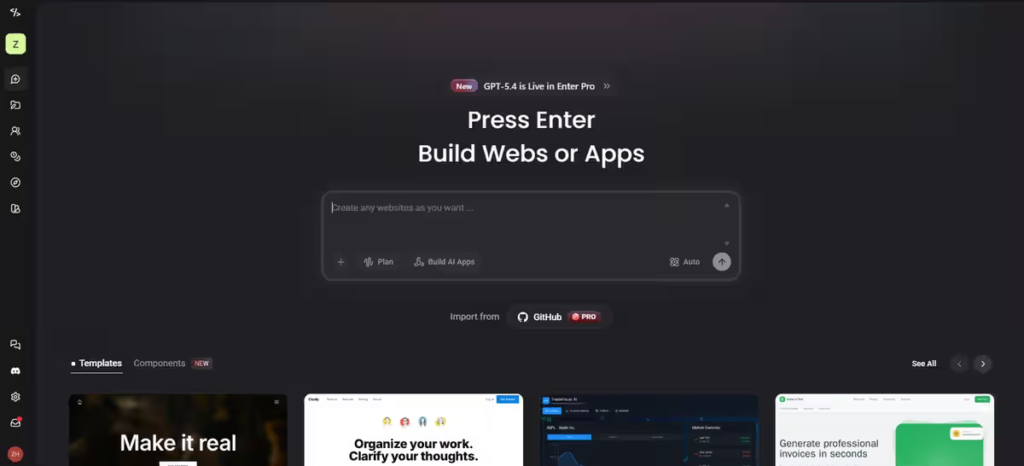
Enter Pro takes a different approach by keeping the editing experience straightforward enough that a restaurant owner or their front-of-house manager can handle basic updates without technical help. Changing your hours for a public holiday, adding a seasonal dish to the menu, updating your private dining availability, these are things that should take five minutes and with the right platform they do.
The built-in tools also mean you are not stitching together three different plugins just to have a functional menu page and a contact form sitting side by side.
Food Photography and Why It Makes or Breaks Your Online Presence
You could have the best food in your city and still lose customers online to a competitor with average cooking and great photos. This is not an exaggeration. Visual presentation is everything in the food industry and nowhere is that more true than on your website.
You do not need a professional photographer on retainer. A decent smartphone, natural light, and a clean simple background get you surprisingly far. The most important thing is to actually take photos of your real food rather than using stock images, which experienced diners spot instantly and distrust immediately.
Show the dishes you are most proud of. Show the atmosphere of your space. Show the kind of experience someone can expect when they walk through your door. Those images do more selling than any amount of descriptive text.
Choosing the Right Website Builder for a Food Business
A general-purpose website builder and a platform suited to food businesses are not always the same thing. Food businesses have specific needs around menu display, reservation integration, mobile responsiveness, and the ability to update content frequently without things going sideways.
Taking the time to look at a proper comparison of the best website maker options through the lens of a food business owner will quickly show you which platforms handle these requirements well and which ones make them unnecessarily complicated. Pay particular attention to how each platform handles mobile display since the majority of people searching for restaurants are doing it on their phones and a site that looks fine on desktop but breaks on mobile is actively sending customers away.
Managing Your Online Reputation Without Losing Your Mind
Reviews are a fact of life for food businesses and pretending they do not matter is not a strategy. Your website plays a role here that most restaurant owners overlook.
When someone has a negative experience and posts about it on a review platform, your website is often the next place they or other curious customers go. A professional, well-maintained site communicates that you take your business seriously even when a single review suggests otherwise.
More proactively, your website is a great place to feature genuine testimonials from happy customers. Not fake pulled-from-thin-air quotes but real feedback you have received through Google, through direct messages, or through comment cards. Displaying that social proof on your homepage or a dedicated page builds trust before a new customer has even tasted your food.
Getting Found Locally When It Matters Most
Local search is where food businesses win or lose online. When someone nearby types “best pasta near me” or “rooftop restaurant in Hyderabad,” the results that come up are determined by a combination of your Google Business Profile, your website content, and signals that tell search engines you are genuinely relevant to that location.
Your website should mention your neighborhood, your city, and the type of cuisine or experience you offer in natural, readable language throughout the content. Not stuffed artificially but woven into how you describe yourself. Keeping your Google Business Profile synced with your website information, same address, same phone number, same hours, strengthens the signal that search engines use to rank you in local results.
Enter Pro makes it straightforward to structure your pages and content in a way that supports these SEO basics without requiring you to understand the technical details behind them.
Conclusion
Your restaurant works hard every single day to deliver good food and good experiences. Your website should be working just as hard when your doors are closed, when someone is planning a birthday dinner, when a tourist is looking for somewhere to eat, when a food journalist is researching the local scene. Building that online presence does not require a big budget or a technical background. It requires the right platform, some genuine content, and the commitment to keep it current. The restaurants that treat their website as a core part of their business rather than an afterthought are the ones that stay full even when the competition is fierce.

