


Selling up in London costs far more than the headline fee on an agent’s brochure. On an average sale of £554,000, the total bill lands between roughly £7,900 and £24,400 once agent fees, VAT, legal work, the energy certificate and moving costs are added together. London prices also slipped 2.2% over the year to August 2026, so every pound of cost matters more to your final profit.
Understanding the costs of selling a property lets you set a realistic net figure before you accept any offer. This guide breaks down each charge, shows how agent fees change with price, and explains where sellers can save.
Key Takeaways
- Agent fees usually run 1% to 3% plus VAT, making them the biggest line item.
- Expect selling costs from about £7,900 up to £24,400 for a typical London home.
- An EPC is legally required and lasts a decade.
- Capital Gains Tax rarely applies to a main home, but second properties can trigger it.
- Comparing three written quotes gives you leverage to negotiate fees.
How Much Does It Cost to Sell a House in London?
A typical London sale costs between £7,900 and £24,400 on a £554,000 property. Estate agent fees form most of that range, while solicitor charges, certificates and removal bills add the rest.
The £554,000 average price comes from HM Land Registry’s UK House Price Index for August 2026. I calculated each total below by applying published fee ranges to that figure.
| Cost | Typical range | Cost at £554,000 |
|---|---|---|
| Estate agent commission | 1.2% to 3.6% inc VAT | £6,648 to £19,944 |
| Conveyancing | £800 to £2,500 | £800 to £2,500 |
| Energy Performance Certificate | £60 to £120 | £60 to £120 |
| Removals | £420 to £1,800 | £420 to £1,800 |
| Estimated total | £7,928 to £24,364 |
Totals exclude mortgage exit charges, leasehold packs and any tax on gains.
| Good to know: Stamp duty is a buyer’s cost. Sellers do not pay it, so it never appears on your selling bill. |
Why Selling Costs Vary Across London
Property type shapes the final bill because fees follow the sale price. Flats account for about half of London sales, and average flat prices fell 5.0% in the twelve months to August 2026, while average prices for London houses rose over the same period.
Fixed costs such as conveyancing, certificates and removals do not shrink with the price. They take a bigger share of the proceeds on a lower value flat than on a larger house.
Competition between agents also moves fees. Agents may offer a lower rate to win instructions in busy postcodes, while experienced firms with strong local reputations often quote higher.
Estate Agent Fees: The Largest Selling Cost
Estate agents charge most London sellers a percentage of the final sale price. Quotes commonly sit between 1% and 3%, with VAT at 20% added on top.
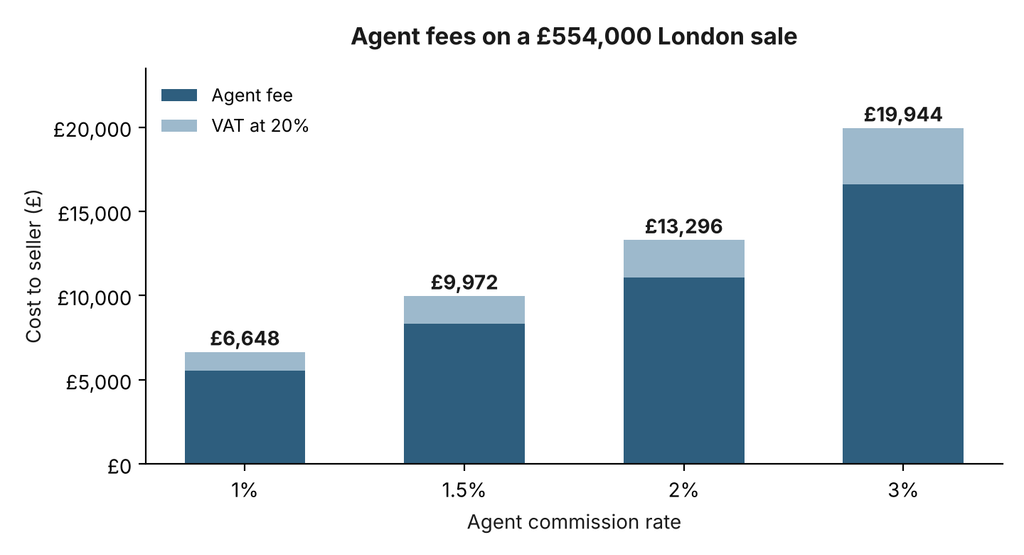
Agent fees including VAT at four commission rates, calculated on the £554,000 London average.
What Your Agent Fee Should Include
A good quote spells out the services behind the percentage. Look for these inclusions when you compare agents:
- Marketing: listings on the main property portals, a For Sale board and social media promotion.
- Presentation: professional photographs, floor plans and an arranged Energy Performance Certificate.
- Viewings: arranging and conducting viewings, then negotiating offers on your behalf.
- Sale progression: keeping the buyer, solicitors and lenders moving after an offer is accepted.
Higher fees do not guarantee better service. Compare what each quote covers, read online reviews and ask recent sellers nearby before picking a favourite.
Percentage Fees and Sliding Scales
Percentage fees rise in step with your sale price. A £554,000 sale at 1.5% costs £8,310 before VAT and £9,972 after it.
Some agents apply a sliding scale instead. The percentage climbs as the price passes set bands, which can make higher value homes costlier than the headline rate suggests.
Fixed Fees and Online Agents
Online agents often replace commission with a fixed fee. A set price helps budgeting, but marketing extras and viewings can push the final bill higher.
Fixed fee services also tend to shift work onto you. Expect to arrange viewings, screen buyers and chase progress yourself.
Contract Terms That Change What You Pay
Agency contracts carry terms that affect your final invoice. Check these points before signing:
- Sole or multi agency: multi agency deals usually carry a higher percentage.
- Tie in period: this sets how long you remain liable for fees.
- Withdrawal fees: some contracts charge if you take the property off the market.
- Ready, willing and able purchaser clauses: these can make you liable even if you withdraw.
Other Costs Sellers Should Budget For
Conveyancing and Legal Fees
Conveyancing is the legal transfer of ownership, and solicitors usually quote between £800 and £2,500 for a sale. Leasehold flats cost more because a managing agent supplies a separate information pack.
This short explainer shows how solicitor fees and disbursements are structured:
| Pro tip: Ask your solicitor for a fixed fee quote that lists disbursements separately. It stops surprise add ons late in the sale. |
Energy Performance Certificate
An Energy Performance Certificate is a legal requirement when you sell, and it costs roughly £60 to £120. Sellers must give buyers a copy at no cost, and each certificate lasts a full decade.
Check the national register first, because many London homes already have a rating on file. A certificate still in date can be reused, which saves the fee.
Removals, Mortgage Exit and Preparation
- Removals: from about £420 for a one bedroom flat to £1,800 for a four bedroom house.
- Mortgage exit charges: lenders often set early repayment fees as a percentage of your balance, so request a redemption figure early.
- Preparation: small repairs and a refreshed floor protect your asking price, and this guide to rooms where herringbone LVT works best shows where the effort pays off.
Tax Points: Capital Gains Tax and Second Properties
Capital Gains Tax does not apply when you sell your only home under Private Residence Relief. The relief covers a property that was your main home for all the time you owned it, with grounds under 5,000 square metres, and that you did not buy to make a gain.
Landlords, second home owners and anyone who let part of their property may owe tax. You must report and pay any Capital Gains Tax owed within 60 days of completion, and late filing can bring interest and a penalty.
Owners with several assets can see how sale timing fits a wider plan in this piece on how wealthy families plan their property portfolios.
| Check first: Confirm your tax position with an accountant or HMRC ahead of agreeing a deal on an additional property. |
How to Keep Selling Costs Down
Sellers control more of the bill than they expect. These five steps cut the total without reducing your sale price:
- Collect three written valuations and compare fees in pounds including VAT.
- Negotiate the percentage, using a lower quote as leverage.
- Read the contract for tie in periods and withdrawal fees.
- Reuse a valid Energy Performance Certificate instead of buying another.
- Request two or three removal quotes before booking.
Local knowledge also helps. Sandra Davidson Estate Agents, based in Redbridge, East London, holds a 4.7 out of 5 TrustScore from 493 Trustpilot reviews and has served East London and Essex for over 20 years.
One seller described the sale on Trustpilot in July 2026, praising the team’s proactive approach and clear progress updates:
“They secured a good price for the property in a very short time”
SPML13, Trustpilot, July 2026
Common Questions Answered
Who pays estate agent fees when you sell a house?
The seller pays the estate agent after the sale completes, on the terms in the agency contract. Confirm the due date and any interest for late payment before you sign.
Can you negotiate estate agent fees in London?
Yes. Agents set commission case by case, so a competing written quote gives you leverage. Compare what each fee includes, such as photography, floor plans and viewings, before accepting the lowest quote.
Is an EPC compulsory for sellers?
Yes. A valid EPC is required when selling, and buyers are entitled to see it. A certificate lasts a decade, so an existing one can be reused.
Do sellers pay stamp duty?
No. The buyer pays stamp duty. Sellers still cover agent fees, legal costs and removals, and may owe tax on a second home.
How long do you have to pay Capital Gains Tax after selling?
Sellers have 60 days from completion to file and settle any bill on a property sale. Selling your only home usually qualifies for Private Residence Relief, so nothing is due.
Before You List
London sellers face a total bill of roughly £7,900 to £24,400 for the average home, with agent fees driving most of the variation. Legal work, certificates and moving costs add a predictable layer, while tax only matters for second properties.
Request three written quotes, read the contract line by line and budget for the full list before agreeing a buyer. A clear cost picture protects your profit, avoids last minute surprises and keeps the sale on track.

